
In the competitive logistics and transportation industry, the efficiency of every drop of fuel and the extension of each mile can be the critical factors determining a company’s profitability.
Driven by the dual forces of globalization and digitalization, cross-border transportation—as a key link in global trade—is experiencing historic development opportunities. Tractor trailer fuel tank size, being a core factor affecting transport efficiency and costs, has become an important focus for technological innovation and product upgrades in the industry.
As a leading manufacturer of specialized transport vehicles, Tongyada has achieved breakthrough progress in fuel tank capacity design and overall vehicle performance optimization through its substantial technical accumulation and innovative capabilities, providing entirely new solutions for the global transport industry.
01 Industry Background: Driven by Challenges and Demands
Cross-border transportation must overcome numerous challenges and confront a series of complex operational conditions, including the endurance test of long-distance travel, adaptability requirements for varied terrains, and uncertainties brought by climate change.
In this context, the tractor trailer fuel tank size directly determines the vehicle’s range and operational efficiency, holding strategic significance for reducing transport costs and enhancing competitiveness.
Traditional fuel tank designs often fail to adequately balance capacity with vehicle weight, space utilization with safety standards, thus limiting the overall performance of transport vehicles.
The industry urgently needs innovative solutions that can optimize fuel tank capacity to the maximum extent without adding extra burden, thereby enhancing vehicle range.
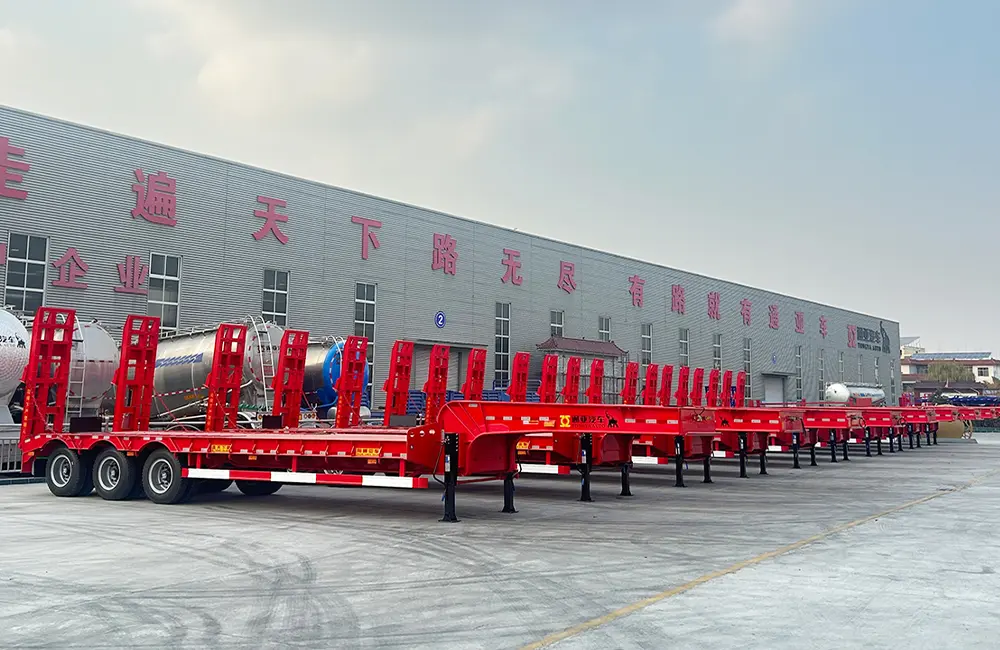
02 Balancing Fuel Tank Capacity and Transport Efficiency
Tractor trailer fuel tank size is a key indicator measuring a vehicle’s range, directly impacting transport efficiency and operational costs. Reasonable tank design can meet long-distance transport needs while balancing vehicle weight and cargo space.
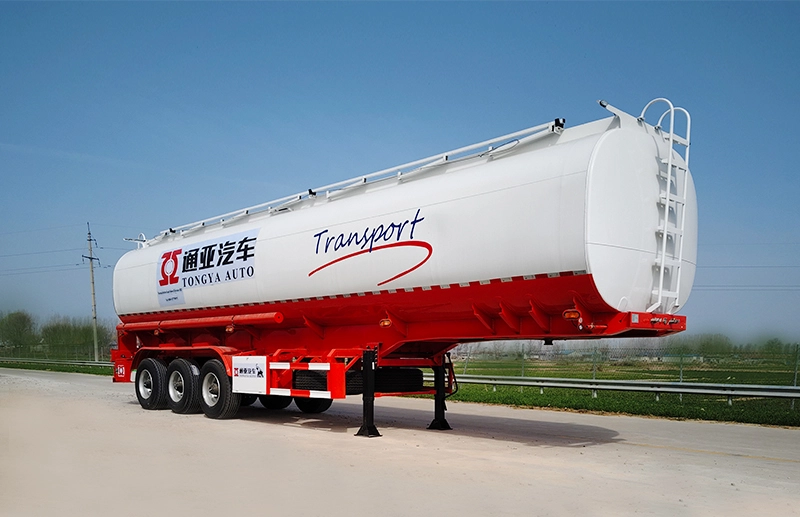
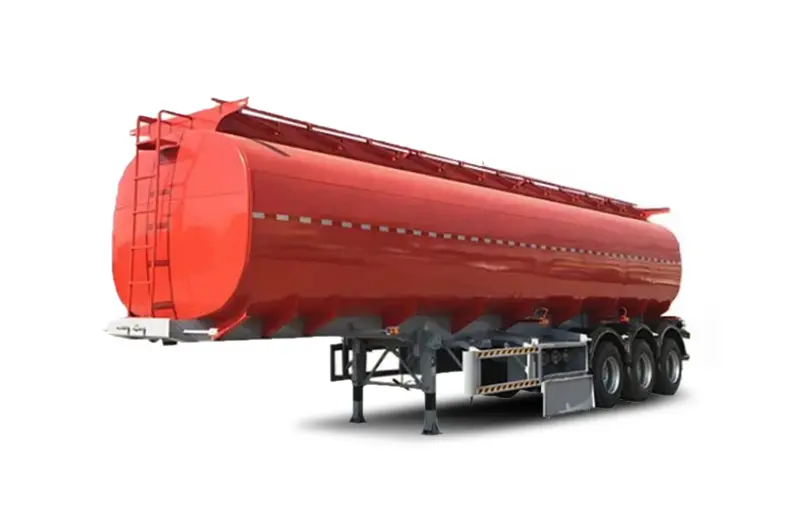
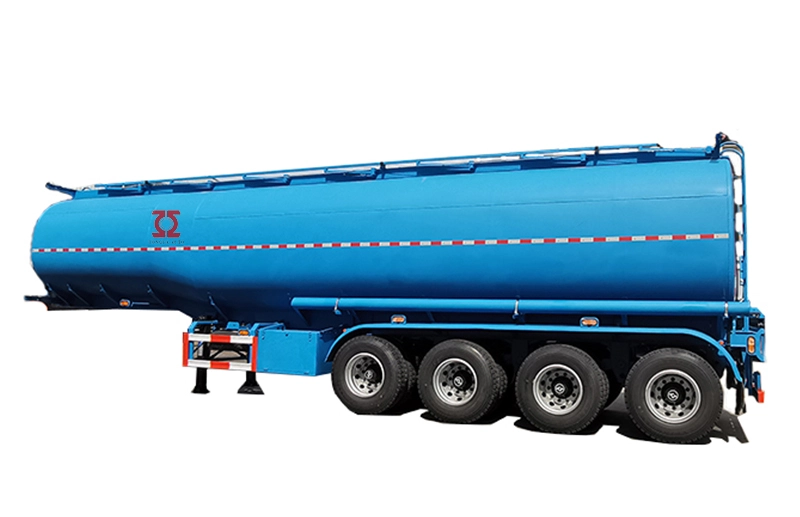
Taking Tongyada’s diesel tanker trailer as an example, its scientifically planned fuel tank capacity can reach 20000L, sufficient to support long-distance cross-border transport without frequent refueling.
This large-capacity design significantly reduces the number of stops during transport, making high-timeliness direct delivery over 17000 kilometers possible.
The optimization of fuel tank size is not only reflected in simple numerical increases but also requires coordination with overall vehicle design. Tongyada’s engineering team achieves the perfect balance between capacity and performance through precise calculations of total vehicle mass, axle load distribution, and space utilization.
For specialized transport vehicles like the Cement Tank Trailer and diesel tanker trailer, the optimized design of fuel tank capacity is particularly important.
These vehicles typically undertake long-distance transport of bulk goods, and efficient fuel systems ensure they complete deliveries on time, avoiding delays caused by mid-route refueling.
03 Technological Innovation: Tongyada’s Engineering Solutions
Addressing industry challenges, Tongyada has introduced a series of innovative solutions, demonstrating exceptional technical capabilities in optimizing tractor trailer fuel tank size.
Materials Science and Structural Design
Tongyada’s semi-trailer oil tankers use high-quality carbon steel and stainless steel materials, customizing tank thickness and structural strength according to the transported medium.
The oil tank body is made of 4mm-6mm high-quality carbon steel, ensuring durability and safety in complex transport environments.
For corrosive media, Tongyada innovatively adopts steel-plastic composite materials with a thickness of 12mm-22mm, ensuring both the corrosion resistance of the tank and the stability of the overall structure.
Capacity Optimization and Space Utilization
Tongyada’s engineering team achieves extreme space utilization through precise calculations and simulations. Taking Tongyada’s bulk cement transport semi-trailer as an example, its effective volume reaches 35-40 cubic meters, demonstrating excellent space utilization efficiency.
The same design concept applies to fuel tank capacity planning, maximizing capacity within limited space by optimizing shape and layout.
Safety Technology and Performance Assurance
While pursuing large capacity, Tongyada never compromises on safety. All oil tankers are equipped with multiple anti-surge baffles, effectively reducing liquid sloshing during transport.
Additionally, integrated advanced safety systems, including three sets of European standard interfaces, bottom valve closing systems, and ABS anti-lock braking devices, provide comprehensive protection for hazardous goods transport.
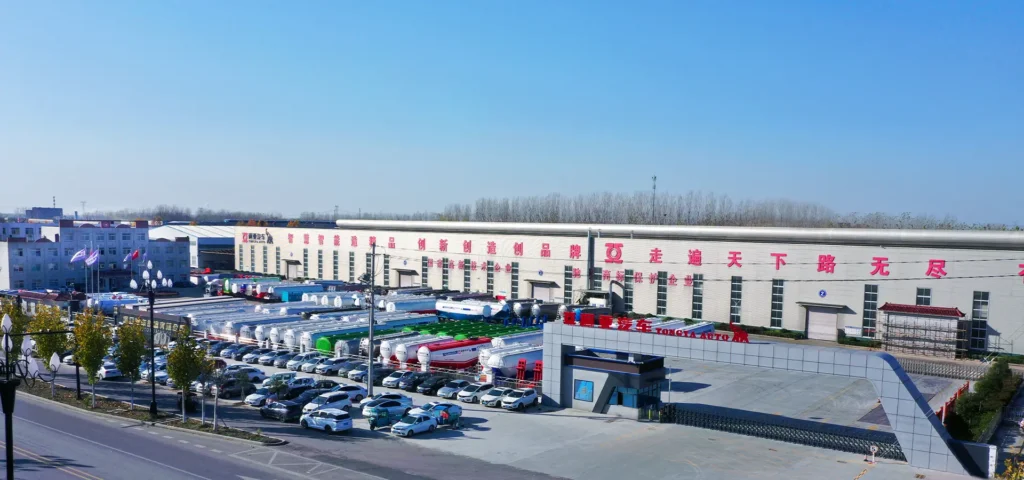
04 Professional Applications: Customized Solutions for Diverse Scenarios
To meet different transport needs, Tongyada has developed specialized vehicle series, each with distinct characteristics in fuel tank capacity and power system configuration.
Cross-Border Long-Distance Transport Solutions
For the special requirements of cross-border transport, Tongyada TIR tractors feature high-quality cold-region configurations, ensuring normal operation in extreme conditions such as -45°C severe cold regions and high-altitude plateaus.
Their optimized fuel tank capacity combined with fuel-saving technology saves 0.5L to 1L of fuel per 100 kilometers, significantly reducing long-distance transport operating costs.
Specialized Vehicles for Cement Transport
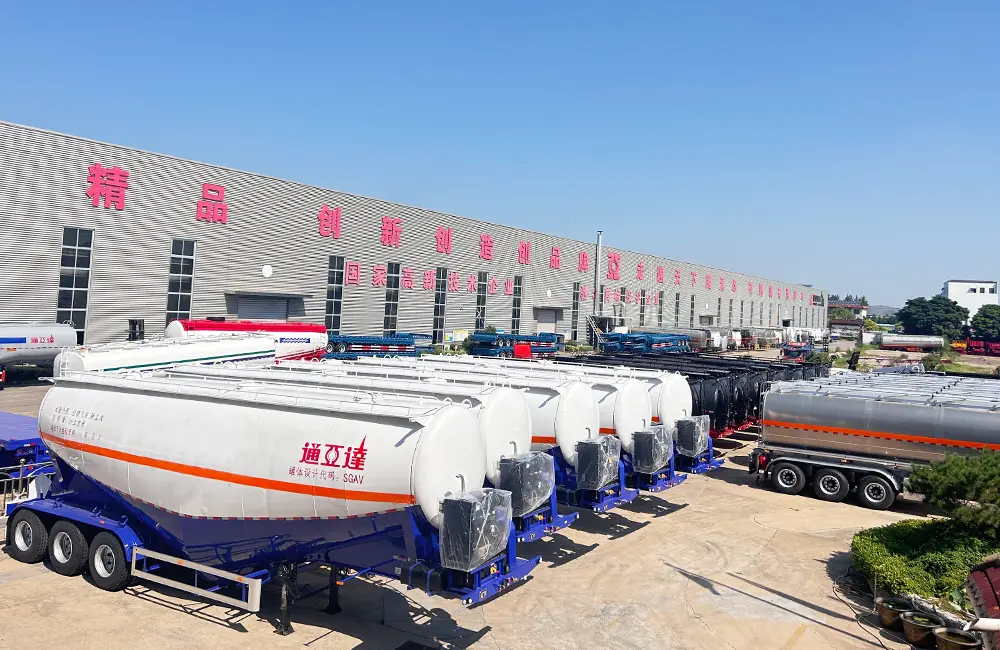
Tongyada’s Cement Tank Trailer series features a V-shaped tank design with a capacity of 35-40 cubic meters, suitable for bulk cement and powder material transport.
The reasonable fuel tank capacity design ensures these vehicles can complete long-distance cement transport tasks without additional refueling requirements, greatly improving transport efficiency.
Liquid Transport Professional Solutions
For liquid material transport, Tongyada’s diesel tanker trailer showcases excellent performance. Its tank capacity reaches 20,000-40,000 liters, featuring a three-compartment design that allows simultaneous transport of different types of fuel.
This design greatly enhances operational flexibility while ensuring transport safety through advanced leak-proof technology and safety valve configurations.
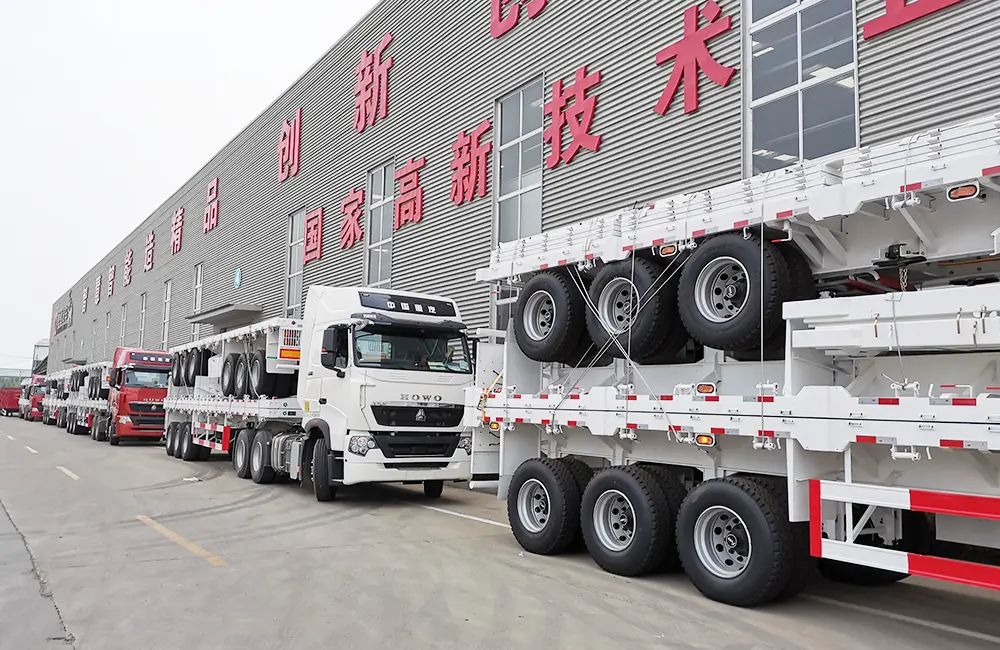
05 Future Trends: Intelligence and Sustainability
As transportation evolves towards intelligence and environmental protection, tractor trailer fuel tank size optimization is also embracing new technological trends.
Digital Management Systems
Tongyada is developing an intelligent fuel management system that monitors fuel tank capacity and consumption in real-time through sensors and IoT technology.
This system can provide optimal refueling suggestions based on route conditions and vehicle load, further enhancing fuel utilization efficiency.
Lightweight Design Trends
Using advanced materials and structural optimization, Tongyada achieves vehicle lightweighting without compromising fuel tank capacity, effectively increasing payload capacity.
This lightweight design trend is particularly important given increasingly strict road weight limits, representing a key direction for industry development.
New Energy Technology Integration
Facing the trend of new energy vehicles, Tongyada is actively developing hybrid and pure electric transport solutions.
While the traditional tractor trailer fuel tank size remains crucial, battery capacity and endurance capability have become new focal points for technological innovation.